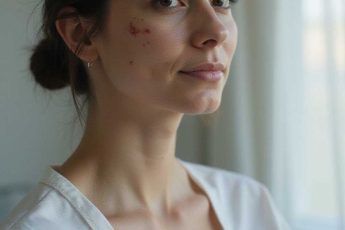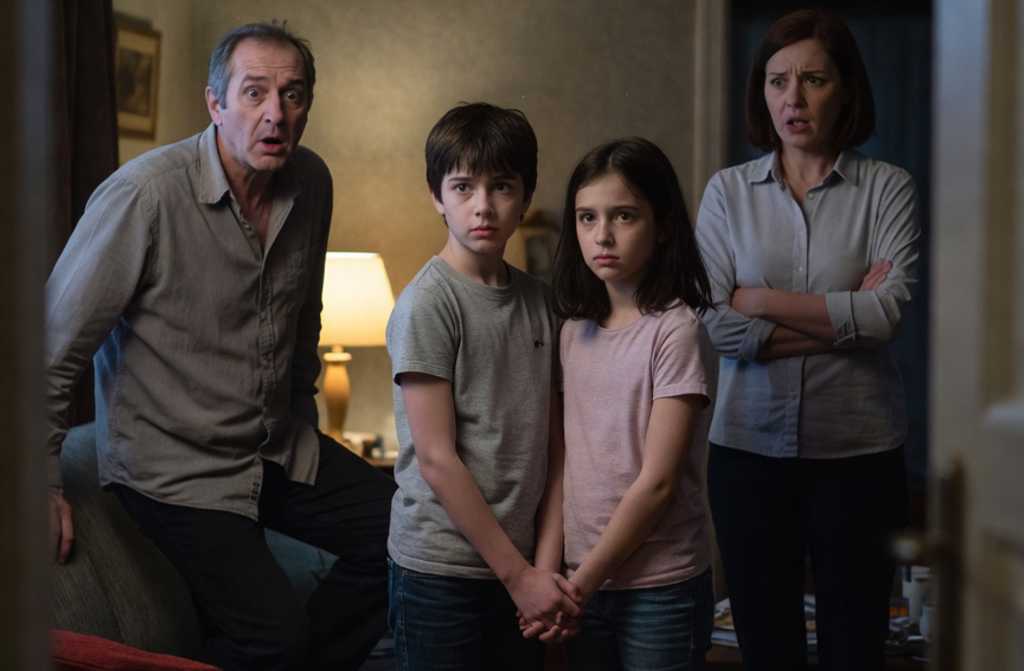
The woman’s voice sliced through the air like a blade. “What the hell is wrong with you this time?! How much longer can this go on?! I’ve had it up to here!” It burst from behind a door in the stairwell, reverberating off the concrete walls of the entire building entrance, raw and unfiltered.
Vesna and Matija were halfway up the stairs when it hit them. They stopped dead, as though an invisible force had slammed into their chests. Their eyes locked for one suspended heartbeat, and in that wordless glance everything passed between themfear, exhaustion, the shared instinct to flee. No need for whispers. Together they exhaled, turned on their heels, and slipped back down the steps without a sound. Neither of them had any intention of stepping through their own apartment door tonight.
Who in their right mind would sit through another evening of their parents’ endless battles? Not them. The twins moved with purpose toward the next entrance, where their grandmother Baba Ljubica lived. In recent months her place had become their only refuge. What used to be weekend visits had turned into almost nightly escapes.
The air inside their parents’ home had grown poisonous. Ivan and Sanja screamed at each other as if the world outside had ceased to exist. Worst of all, they had started pulling the children into the crossfire.
Sometimes Sanja would whirl on her daughter, voice cracking with demand. “Tell him I’m right! You agree with me, don’t you?”
Other times Ivan would cut in before anyone could answer, turning to his son. “No, I’m the one who’s right here. Back me up!”
Vesna and Matija kept their mouths shut. They refused to pick sides, refused to feed the fire that consumed their home. All they craved was quiet, safety, the simple warmth they found only at their grandmother’s.
These explosions had become as predictable as the weather. The twins had learned the early warningsthe rising pitch in a voice, the way dishes clattered too hard in the sink, the sharp looks exchanged across a room. Any ordinary evening could explode without warning. No child should have to live like that, constantly braced for the next storm.
They still couldn’t understand what had broken their family. It had never been perfect, but once upon a time their parents had known how to talk things through. Arguments happened, sure, but they ended with lowered voices and cups of coffee shared at the kitchen table, plans for the weekend sketched out together.
Everything changed roughly two years ago. It felt as if someone had swapped their real parents for strangers who picked fights over nothing. A mug left on the counter? A lecture on disrespect that lasted twenty minutes. A shirt on the wrong hook? Sarcastic jabs about order that lasted even longer. A spoon in the sink? Treated like a personal betrayal.
One evening Vesna sat at Baba Ljubica’s kitchen table, stirring her coffee in slow circles. She watched the dark liquid swirl, then spoke without lifting her eyes. “How did it get like this, Baba? Everything fell apart after their vacation together. What actually happened there?”
The older woman set her own cup down carefully. Her hand reached out and rested on Vesna’s wrist, gentle but steady. She had her own suspicions about what had gone wrong between her son and daughter-in-law, and none of them brought comfort.
“Adults have to work through their own problems,” she said, keeping her voice even. “Sometimes they need time to figure out what comes next.”
Vesna nodded, but the doubt stayed in her eyes. She knew her grandmother was holding something back, yet she didn’t push. What would be the point? As long as they saw her as a child, no one would tell her the truth.
“We can’t live with the shouting anymore!” Matija burst out, his voice cracking under the weight of it. “Can’t finish homework, can’t even read in peace. I don’t remember the last time we ate a meal together without someone storming off. If they hate each other so much, they should just divorce and stop pretending!”
The words escaped before he could stop them, but they carried every ounce of truth from the past months. He wasn’t only speaking for himselfhe felt his sister’s pain as his own. Their house had become a place without silence. One sharp comment from Sanja, one irritated reply from Ivan, and the air would split open again, leaving nowhere to hide.
“Matija” Baba Ljubica set her knitting aside. She studied her grandson’s face, then shook her head slowly. “Have you thought about what happens if they actually split up? The two of you would be divided. Are you ready to live apart from your sister?”
“We’ll move in with you,” Vesna said at once, her voice pleading. “We’re already here most of the time anyway. You wouldn’t mind, would you?”
Baba Ljubica went very still. She saw how worn down they were, how the constant tension had carved lines into faces that should still look young. Part of her ached to say yesto give them the peace they deserved, the quiet space to study and breathe and feel safe. She loved them fiercely enough to open her doors forever.
But another part of her hesitated. What would she tell her son and daughter-in-law? How could she explain that their own children no longer wanted to live under their roof? Would Ivan and Sanja even allow it? And if they did, what damage would it do to the fragile threads still holding the family together?
“We shouldn’t rush into anything,” she said at last, drawing a slow breath. “You know you’re always welcome here. But first let’s try talking to your mother and father. Maybe the four of us can find a way to fix this.”
“Don’t worry, we’ll speak to them ourselves,” Vesna answered, a small hopeful smile breaking through. She could feel her grandmother leaning toward agreement, and that was everything. “Just don’t say no. Please. We can’t go back there. It would be better for everyone if they lived apartotherwise one of them is going to get hurt. I saw Papa raise his hand at Mama yesterday He didn’t hit her, I swear. But he was right on the edge.”
She stopped, the memory flooding back with sickening clarity. She had walked into the kitchen for water and found them frozen in placeher father’s arm lifted, her mother’s body instinctively curling away. The moment had stretched until time itself seemed to break.
“Baba, please say yes,” Matija added, stepping closer and gripping her hand. “We’ll help with everything around the house. Just don’t make us go back. They don’t even notice we’re there anymore. Yesterday I told Papa about the parent-teacher meeting. You know what he said? ‘Ask your mother.’ So I did. Guess what she told me?”
“Go ask your father?” Baba Ljubica said quietly, already knowing.
“Exactly.” Matija’s mouth twisted. “Then they spent the next two hours yelling about it from different rooms. I just stood in the hallway listening.”
“And I needed a signature for the school trip to the museum,” Vesna added, eyes on the floor, fingers twisting the hem of her sleeve. “Now I’m the only one in my class who can’t go. Neither of them signed it. Instead they started fighting about whose job it was Mama said it was Papa’s responsibility, Papa said Mama should handle school things.”
Baba Ljubica looked at both of them and saw the exhaustion that no thirteen-year-old should carry. It wasn’t ordinary tiredness. It was the kind that settled deep after months of walking on eggshells, of replacing family warmth with constant shouting, of receiving indifference instead of care.
“It’s always the same,” Matija muttered, shoulders sagging. “Everything we ask for turns into another fight. We don’t even want to come home. The other night we got back at eleven and they didn’t even scold us. Just sent us to bed without asking where we’d been. Then they spent hours blaming each other for raising us badly.”
The twins sighed at the same moment. Lately they had begun to believe divorce might be the only solution left. Yet the thought of being separated terrified them more than the arguments. One would stay with their mother, one with their father, and the closeness that had always defined them would shrink to occasional weekends.
They had whispered about it in their room after dark, weighing every possibility. Once Matija had joked about running awayjust grabbing bags and walking until the city disappeared. He had smiled when he said it, trying to break the heaviness. But Vesna’s eyes had lit up with something dangerous and real. “What if we actually left?” she had whispered. “Even for a couple of days.” In that instant both understood how far things had gone: even escape no longer seemed unthinkable.
Then the idea arrived together, as if spoken by the same mind. “What if we asked Baba if we could live with her?” Vesna had said. “She won’t shout. We won’t have to hear any of it.” Matija had answered at once. “Yes. She’s kind. She always listens. And her apartment is big enough.”
They had let themselves imagine itquiet mornings, homework done without interruption, evenings playing cards or watching old films with their grandmother. No raised voices, no accusations, no need to lock themselves away. For the first time in years, something like hope had stirred inside them. Let their parents destroy each other if they had to. Vesna and Matija would finally have peace.
“Mama, Papa, we need to talk,” the twins said together, standing in the living room doorway. They had waited until both parents were home, then walked in with purpose. Vesna kept a tight hold on her brother’s hand; the contact steadied her. “But you have to promise to hear us out before you say anything.”
Ivan looked up from his phone, eyebrows raised. Sanja straightened from the couch where she had been folding laundry, her face tightening as though the children had spoken in a foreign language.
“This is your fault,” she snapped, folding her arms. “They’re already making demands like we’re the ones who have to answer to them!”
“And who are you to talk?” Ivan shot back, tossing his phone aside. “I’m the one working every hour to keep this family going. You were supposed to be raising them. Look what that’s producedthey think they can give us orders now.”
The twins glanced at each other. They had expected the fight to swallow the conversation immediately, but they couldn’t retreat.
“Stop it!” Vesna’s voice wavered but she stepped forward anyway, forcing the words out clearly even as her stomach twisted. “Matija and I have decided. You need to get divorced.”
The room went dead silent. Sanja’s mouth hung open. Ivan rose slowly from the couch as if the floor had shifted beneath him.
“Well, that’s new,” Sanja said, her tone low and dangerous. “Vesna, you’re still a child. You don’t get to tell grown people how to live their lives. What else have you two ‘decided’? Maybe you’ll divide up the apartment while you’re at it?”
“If you don’t divorce, we’ll contact child services,” Matija said, squeezing his sister’s hand until his knuckles whitened. His voice stayed steady even though his heart hammered. “And then, Papa, you could lose your job. That company doesn’t like public scandals, do they? You said yourself reputation is everything there.”
“And you, Mama,” Vesna continued, meeting her mother’s eyes without flinching, “the neighbors will stop speaking to you. Everyone already hears you fighting through the walls. We’ll make sure they know the rest.”
“They’re threatening us!” Sanja’s voice cracked as she looked between them. “These are our own children. How can you speak to us this way?”
“We’re not threatening,” Matija answered quietly. “We just can’t live like this anymore. We’re tired of the shouting, of being ignored, of every single request turning into a war.”
“You’ll divorce and move out,” the twins finished together, the words rehearsed but no less sincere. “We’ll live with Baba. It will be better for everyone. We won’t have to stand in the middle anymore.”
Ivan and Sanja stood frozen. For once neither had a ready accusation. They had spent years interrupting each other, assigning blame, but this time the words died before they formed.
Their thirteen-year-old children had changed the rules entirely. Vesna and Matija stood shoulder to shoulder, hands linked, facing their parents with a steadiness that belonged to people much older. They spoke of divorce and separation as if they had already lived through the consequences.
The couple had considered ending the marriage before. Every time the same obstacle stopped them: the children. Splitting the twins had always felt impossible. They were inseparable, always had been. The thought of forcing them into different homes, seeing each other only on weekends, had been unbearable.
Living with their grandmother had never crossed their minds. Both parents had been too consumed by their own anger to consider it. Now, hearing the suggestion spoken aloud, Ivan and Sanja found themselves wondering whether it might be the only workable path left. Baba Ljubica adored the children. Her apartment was large. She would keep them safe.
“I’ll call my mother,” Ivan said at last, the words pushed through clenched teeth. “If she agrees”
He didn’t finish. Sanja cut in, her voice suddenly heavy with a fatigue that startled even her. “Then we’ll stop destroying each other. Call her. I’ll be glad not to see your face every morning.”
The sentence lingered between them. She hadn’t meant to sound so final, but years of accumulated hurt had pushed the words out before she could soften them.
“I’ll be just as glad,” Ivan replied, hiding the sting behind a bitter half-smile.
There was no rage left in his tone, only exhaustion and the grim recognition of what their marriage had become. He pulled out his phone and dialed. While the line rang, both parents stared at opposite walls, unable to look at each other. They could feel the ground shifting beneath the family, and neither knew where it would settle.
That day the Horvat family crossed a line they could not uncross. It began with Ivan’s long conversation with his mother. Baba Ljubica listened without interrupting, only asking quiet questions when she needed clarity.
When he finished, a heavy silence filled the line. She drew a long breath. “If you both believe this is best for the children, then I agree. They will be safe here. I’ll look after them.”
By evening Ivan and Sanja sat across from each other at the kitchen table for the first time in months without raised voices. They spoke in low tones, working through the practicalities one by one. Eventually they reached the same conclusion: divorce was the only clean way forward. The children would move to their grandmother’s. Both parents would send money each month for their care.
Neither intended to abandon their responsibilities. Ivan promised to visit every other Saturday morning and take the twins out. Sanja would come on Sundays. Different days meant fewer chances for conflict.
“This way they won’t feel like we’ve disappeared,” Ivan said. Sanja nodded.
They agreed on the rest without argument: no badmouthing each other in front of the children, no using them as messengers, no turning visits into battlegrounds.
“We are still their parents,” Ivan said. “That doesn’t end just because we stop being married.”
Time proved the choice was the right one. Vesna and Matija finally exhaled. They began to live like other teenagers. Vesna joined an art group she had dreamed of for years but had never had the peace to pursue. Matija started playing football and made friends on the team. The two of them walked through Zagreb together, went to films, talked about school without the constant dread that a shout would erupt at any moment.
Their grades improved because they could actually concentrate. Teachers noticed. “You’ve both become so focused,” one said. “Whatever you’re doing, keep doing it.”
Life settled into something quieter. Not perfect, but steady. The twins stopped flinching at every sound. They stopped hiding. They simply existed as children should.
Five years later the rhythm of the Horvat family had become predictable and calm. Vesna and Matija had adjusted completely to the new arrangement. Studies, clubs, friends, and long evenings at their grandmother’s filled their days. Their parents still visited on alternate weekends, bringing small gifts and careful attention, but the old bitterness had been replaced by polite distance. Over time they had learned to speak to each other without igniting old fires.
The first real meeting between the former spouses happened at the twins’ graduation. Both came to the school celebration. At first they sat on opposite sides of the hall, careful and stiff. As the evening wore on, the tension eased.
When the music started, Ivan crossed the floor and stopped in front of Sanja. “Would you like to dance? For old times’ sake.”
She hesitated, then nodded.
Later they sat outside on a bench in the school courtyard, watching younger students laugh by the fountain. Conversation came naturally at firststories about the children, then memories of earlier years. They spoke of the good times without reopening old wounds. From across the yard Vesna and Matija watched, relief and pain mixing in their chests. It hurt to remember how much their parents had once loved each other and how completely that love had turned sour.
The peace shattered the very next day. Ivan and Sanja asked the twins to meet them at a café. Over coffee they reached across the table, took each other’s hands, and Ivan smiled as though delivering the best news possible.
“We’ve decided to remarry,” he said. “These years apart showed us our feelings never died. We still love each other. We want to try again.”
Sanja’s face glowed with the same certainty.
Vesna and Matija stared at them. The light in their eyes went out at once. Vesna’s hands tightened around her cup. Matija’s jaw locked. The same mistake, all over again. Had their parents learned nothing?
“You’re serious?” Vesna managed.
“Completely,” Ivan answered. “We’ve grown. We know how to listen now. This is our second chance.”
The twins said nothing. Inside them, hope and dread crashed against each other. They wanted to believe change was possible. They were terrified it wasn’t.
They didn’t argue. They didn’t congratulate. The silence stretched until Sanja’s expression faltered. “Aren’t you happy for us?”
Vesna and Matija only looked at each other and shrugged. What could they say that wouldn’t sound cruel or false? The rest of the meeting passed in awkward fragments. Their parents talked about plans; the twins nodded at the right moments while their minds raced elsewhere.
On the walk home Vesna spoke quietly. “I hope they actually know what they’re doing.”
Matija exhaled through his teeth but had no answer.
“So we’re applying to universities in Zagreb?” Vesna opened her laptop and began scrolling through admissions pages. “As far away as we can get. I already know how this latest reconciliation is going to end.”
“We’re going,” Matija said, the exhaustion in his voice sounding older than his years. He dragged a hand through his hair. “They’ll manage a month, maybe two, before the doors start slamming again and the accusations fly. I won’t be their hostage anymore. I won’t spend every morning trying to guess which one of them is in a bad mood and which one of us will catch the next wave of blame.”
He paced the room, gathering books without really seeing them. The same question circled in his head: why did two adults who were supposed to model strength keep repeating the same destructive pattern? Why couldn’t they solve problems instead of circling back to the same failures?
“We have to leave,” he said again, stopping at the window. Outside, the Zagreb rooftops glowed orange in the fading light. “Far enough that their fights can’t reach us. Let them tear each other apart if that’s what they need. We’re not their therapists or their referees or their shields. We have our own futures. I won’t let them wreck those too.”
“When do we send the applications?” Vesna asked.
“Tomorrow,” Matija answered without pause. “Before either of us can talk ourselves out of it.”
She nodded, eyes on the screen. She had already spent days comparing programs, dormitories, and career paths after graduation. Lists filled the notebook beside herdeadlines, requirements, contacts.
“The important thing is studying without their chaos in the background,” she said. “At least we’ll be far enough away.”
“Exactly,” Matija agreed, sitting beside her. “When they start screaming about whose fault it is this time, we won’t hear a word. They can call and complain all they want. We’re done being pulled into it. And this idea of giving their marriage another chance?” He gave a short, humorless laugh. “That’s their decision. Not ours.”
Sanja and Ivan went through with the second wedding after all. They kept it smallno grand reception, no crowds, no unnecessary expense. Just a simple ceremony at the municipal office followed by dinner with close family and a few friends.
In the photographs they looked genuinely content, hands clasped, eyes soft. The images showed none of the old anger, only the hope that years apart had healed what once broke. Vesna and Matija studied those pictures and wondered, against their better judgment, whether this time might be different.
It wasn’t. The first weeks after the wedding stayed quiet. They made an effortmore patience, more small kindnesses. Then the old patterns returned. After a month the sharp comments started again. A forgotten towel. A late arrival. A television left on too loud. Voices rose. Doors slammed. Two months in, a fight over groceries ended with Ivan hurling a cup against the wall and Sanja smashing a plate on the floor. The sound of shattering ceramic echoed through the apartment.
After every explosion they called their children. The conversations always followed the same script.
“Can you believe what he said to me today?” Sanja would cry into the phone when Vesna answered. “He doesn’t even try to understand!”
“Son, you have to see my side,” Ivan would tell Matija. “I’m doing everything I can, but she looks for reasons to fight.”
Vesna and Matija had learned to cut these calls short. They offered no advice, took no sides.
“Mama, I’m in the middle of a lecture,” Vesna would say evenly, checking the time. “I’ll call when I’m free.”
“Papa, I have work due tonight,” Matija would answer, eyes on his screen. “We can talk this weekend.”
Weekends never came. The twins invented reasonsexams, shifts, plans with friendsand the calls grew rarer. They felt no guilt. Protecting their own peace was not the same as betrayal.
They had built real lives in Zagreb. Vesna had thrown herself into psychology, fascinated by how minds worked and how people could be helped. In her third year she began volunteering at a center for teenagers from difficult homes, leading discussions and teaching them to name their pain. She recognized pieces of her own story in every face and tried to offer the listening ear she had once needed herself.
Matija had found his place in programming. The logic of code, the satisfaction of building something that functioned, pulled him in completely. He stayed late at the university lab, joined hackathons, and in his fourth year his team placed third in a national app development contest. That success led to a part-time job at a small tech firm where he learned to collaborate, manage deadlines, and solve problems under pressure.
Together they planned futures that had nothing to do with their parents’ storms. Vesna wanted to open a practice helping families communicate before damage became permanent. Matija dreamed of starting his own company. They sat in cafés sketching ideas on napkins, arguing over possibilities, laughing when one of them got too ambitious. In those moments they felt anchored. They had each other. They had direction.
When the next desperate call cameSanja in tears, Ivan insisting the other was impossiblethe twins answered with the same calm refusal they had practiced.
“Enough,” Vesna said firmly. “You two need to sort this out without us. You have your lives. We have ours.”
“But you’re our children,” Sanja sobbed. “You owe us support!”
“If you acted like adults instead of fighting like children, we would support you,” Matija cut in. “You chose to remarry. You chose to keep hurting each other. You can’t share space without destroying it. Stop pretending and get divorced properly this time. Move apart.”
The words were harsh. They knew it. But Vesna and Matija had finally chosen survival over loyalty to a war that was never theirs to fight. They wanted to live without the constant threat of the next explosion. And for the first time, they were free to do exactly that.